The story of Joseph Wright of Derby and Art Fund
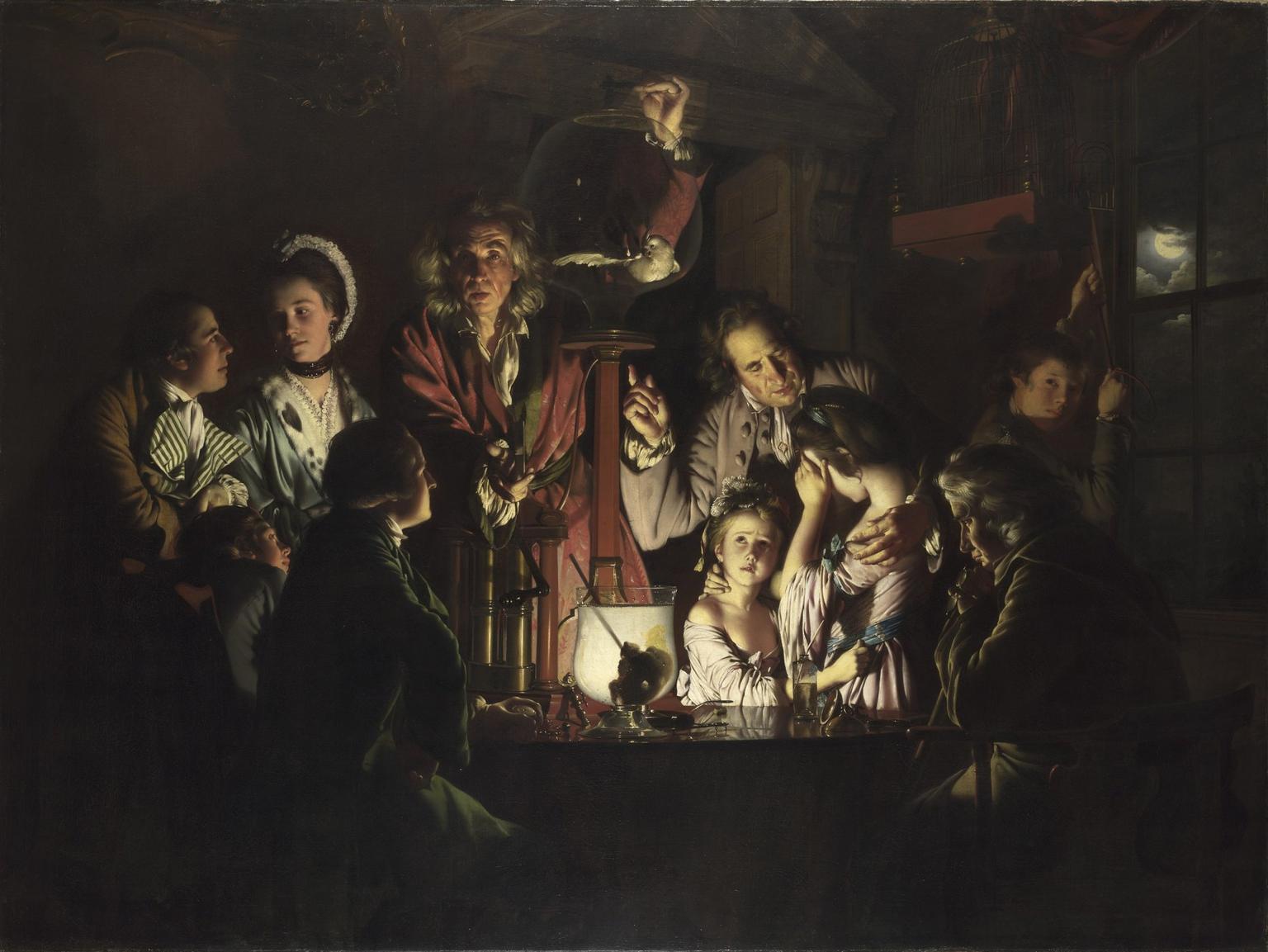
Paul McQueen tells the story of artist Joseph Wright of Derby through the works Art Fund has supported museums to acquire.
A version of this article first appeared in the spring 2026 issue of Art Quarterly, the membership magazine of Art Fund.
At the centre of Joseph Wright of Derby’s (1734-97) most famous painting, a white cockatoo, deprived of oxygen, swoons, close to death, in the glass orb in which it is trapped. Around the expiring bird, 10 human faces, starkly lit by the light of a candle, look on, or away, responding in their own unique way to the experiment taking place for their entertainment and enlightenment. Horrified, tentatively curious, impassive, rapt, blithely indifferent, meditative. Outside, the moon burns full and bright behind the clouds.
An Experiment on a Bird in the Air Pump (1768) is an immense painting, highly dramatic, a spectacle within a spectacle. It speaks to the spirit of the Enlightenment – that period of discovery, innovation and learning when fact came to supersede belief – and the reactions provoked by profound scientific, technological and social change. The work is currently on display at the National Gallery in London in the exhibition Wright of Derby: From the Shadows, alongside another of the artist’s large-scale masterpieces, A Philosopher Giving That Lecture on the Orrery in Which a Lamp Is Put in the Place of the Sun (1766), and approximately 20 other exhibits, including paintings, works on paper and objects, all of which are linked by Wright’s use of strong artificial light – candles, lamps, white-hot iron, phosphorus – and the deep shadows it creates.
Wright was the leading exponent of these ‘candlelight’ paintings in his day, famous for his use of tenebrism (a style of painting that highlights details of people and objects against dark backgrounds), inspired by earlier masters of the use of contrasts of light and dark, such as the chiaroscuro of Caravaggio (1571-1610). But the exhibition also explores the wider themes in Wright’s work.
After its run in London, the exhibition will travel to Derby Museum and Art Gallery, home to the world’s largest collection of the artist’s work. A substantial selection of his paintings is on permanent display in the Joseph Wright Gallery; his drawings, prints, letters and other archival material can be viewed in the Joseph Wright Study Room; and yet more paintings hang nearby at Pickford’s House, many of them against the backdrop of typical 18th-century interiors.
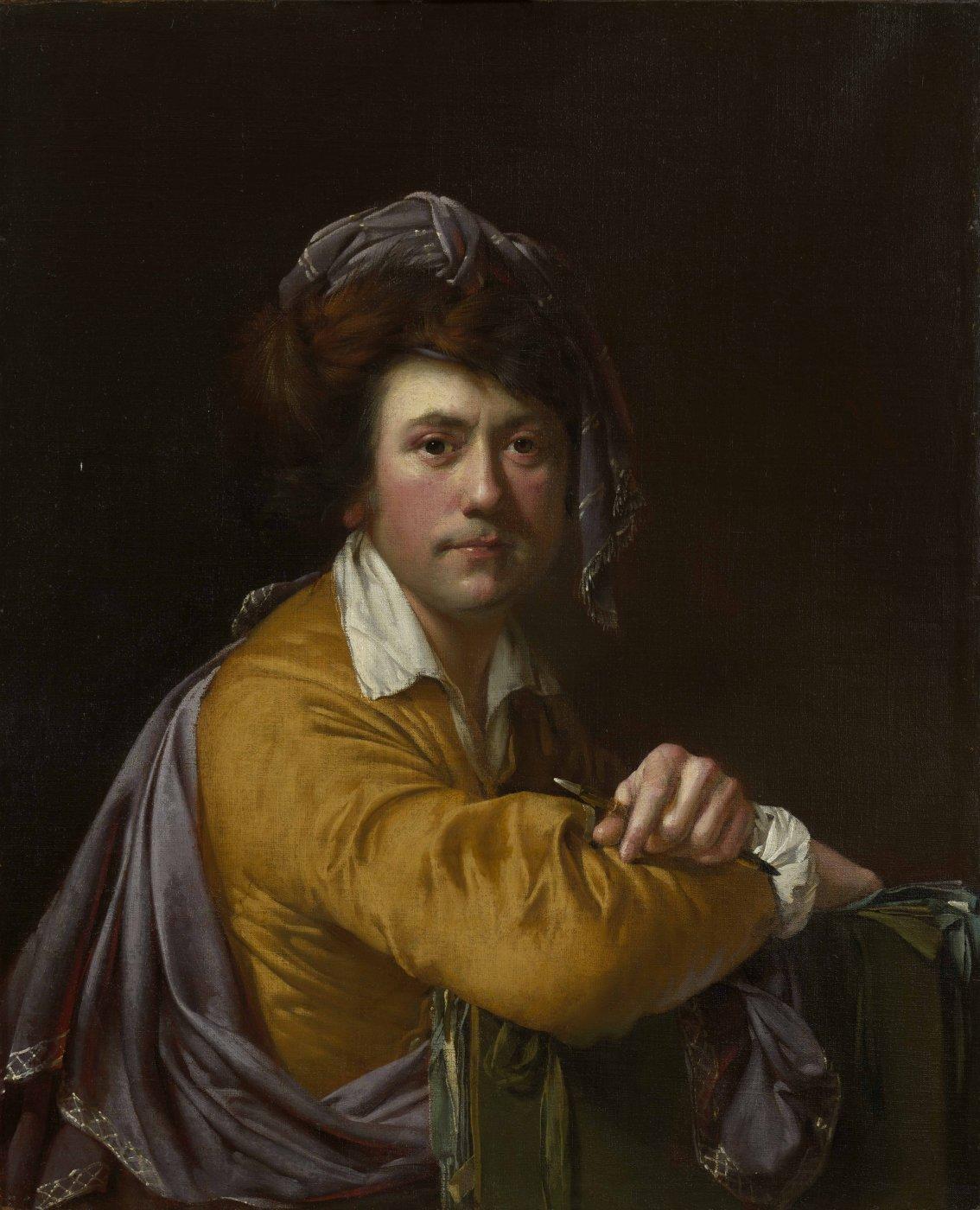
Among the highlights of Derby’s collection is Self-Portrait at the Age of About Forty (c1772-73), on the reverse of which is a preparatory oil sketch for The Air Pump, which was acquired with Art Fund support in 2022. The self-portrait shows Wright at the peak of his success, rosy-cheeked and luxuriously attired. Indeed, it is the only one of his 10 self-portraits which explicitly depicts him as an artist, clutching a porte-crayon in his left hand and resting his right arm nonchalantly on a portfolio.
Since 1925, Art Fund has supported 31 acquisitions of Wright’s work for museums and galleries across the UK, including 19 for Derby, with grants amounting to just over £2 million in today’s money. The acquired works span his five-decade career and together help tell the story of a wonderfully gifted artist who struggled to turn high praise into high prices.
Joseph Wright was born in Derby on 3 September 1734, into a well-off, but not wealthy, family. Interested in mechanical things from a young age, he was also a talented flautist. However, his passion was for drawing, and, in the evenings, he would secret himself in the attic with paper and pencil, away from his father’s disapproving gaze.
Nevertheless, at 17, Wright was sent to London to study for two years under Thomas Hudson (1701-79), who was the foremost society portrait painter of the time. Unusually, he returned for more training in 1756, so committed was he to becoming a technician of the highest calibre.
Self-Portrait in Van Dyck Costume (c1753-54), acquired by Derby in 1985, demonstrates both his prodigious talents and abundant self-confidence. The black silk and white-lace collar and cuffs reference Anthony van Dyck’s (1599-1641) masterful final Self-Portrait (c1640), acquired by the National Portrait Gallery in 2014 following a major Art Fund fundraising campaign.
Never tempted by life in the capital, Wright returned to Derby after his training and began painting portraits of the many men of science and commerce who were making their names and fortunes thanks to the burgeoning Industrial Revolution, as well as their wives and families, work he continued throughout his career. William Brooke (1760), a textile magnate, acquired by the Danum Gallery, Library and Museum in Doncaster in 1999, and Jedediah Strutt (c1790), a hosier who co-invented the ribbed stocking, acquired by Derby in 1976, depict two such men.
Over the decades, Art Fund has also helped Derby to acquire a number of group portraits, such as The Children of Hugh and Sarah Wood of Swanwick, Derbyshire (1789), The Reverend D’Ewes Coke, His Wife Hannah, and Daniel Parker Coke (c1782) and Richard Arkwright Junior, with His Wife Mary, and Daughter Anne (1790), acquired in 1934, 1965 and 2003, respectively.
Wright then spent a productive three years living and working in Liverpool from 1768, producing portraits such as Fleetwood Hesketh and Mrs Frances Hesketh (both 1769), Mrs James Hardman of Rochdale and Allerton Hall (1769) and John Stafford and Barbara Tatton (both 1769), respectively acquired by National Museums Liverpool in 1990, Museum of Lancashire in 1996 and Macclesfield Silk Museum in 2016.
From early on, he was known as Wright ‘of Derby’, possibly to distinguish himself from a fellow Joseph Wright, since forgotten by the art-history books, perhaps to signify regional pride. Derby and the surrounding area, indeed, was a boomtown in those days, home to figures such as Erasmus Darwin, a physician and leading member of the Midlands Enlightenment, whom Wright painted in 1770, a portrait acquired by Birmingham Museum & Art Gallery in 2013, and again in 1792, a work that Derby acquired in 1955.
Erasmus, along with another of Charles Darwin’s grandfathers, the potter, entrepreneur and abolitionist Josiah Wedgwood, was a member of the Lunar Society (with which Wright was also associated, though never in fact joined), an informal group of inventors and intellectuals who met each month on the Monday nearest the full moon, whose light made it easier, and safer, for them to travel home after long hours of fruitful discussion.
Wright not only painted captains of industry, such as Sir Richard Arkwright (c1783-85), acquired by the National Portrait Gallery in 2008, but also their enterprises. Arkwright’s Cotton Mills, by Day (1795-96), acquired by Derby in 2016, shows the enormous factory that made Arkwright phenomenally wealthy. Arkwright, who effectively stole the idea for the water-powered spinning frame, employed men, women and children in his mill, which operated around the clock.
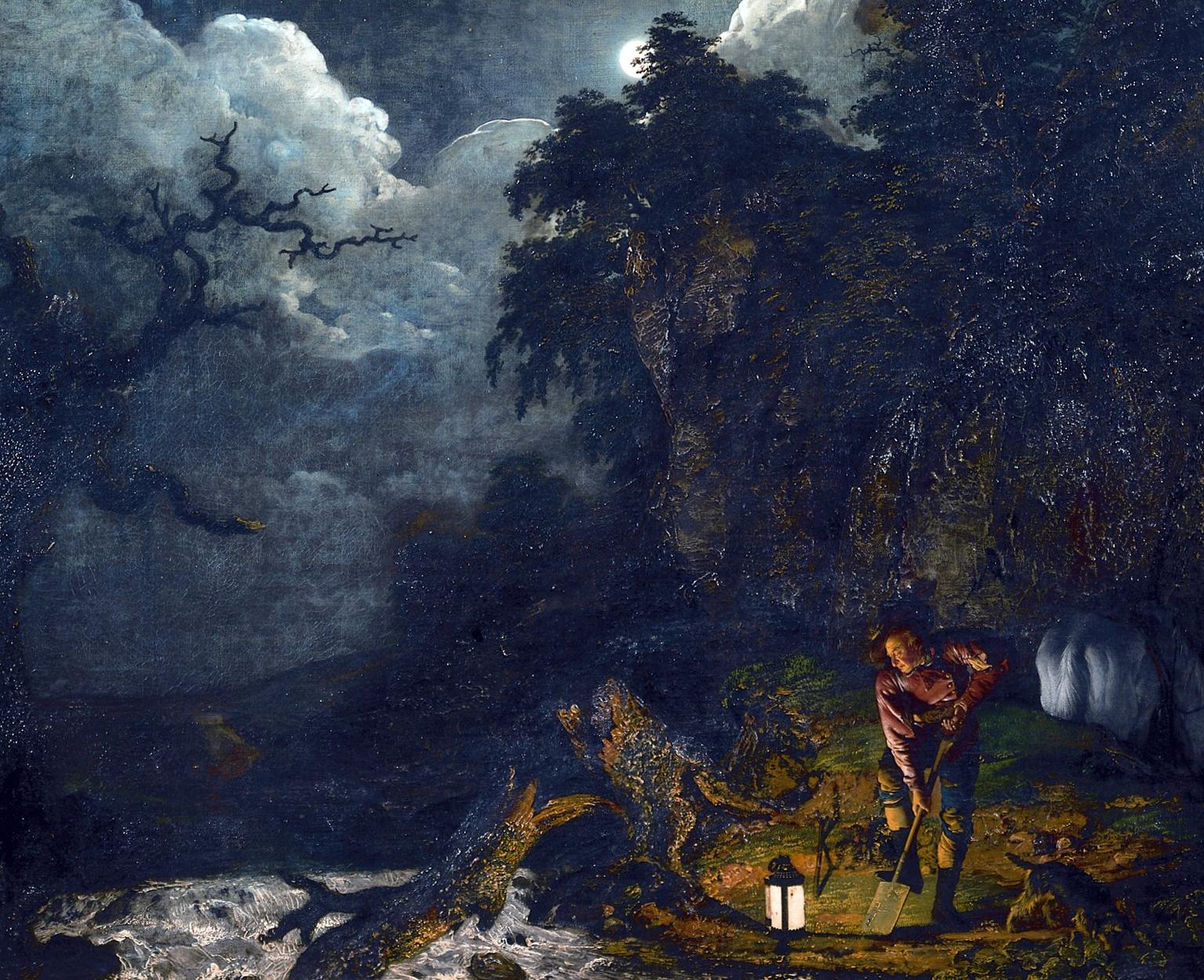
During the 1760s, Wright developed the ‘candlelight’ paintings that established his reputation. Having seen The Air Pump at the Society of Artists show in 1768, one reviewer described him as a ‘very great and uncommon genius’. Earthstopper on the Banks of the Derwent (1773) and A Blacksmith’s Shop (c1771), acquired by Derby in 1956 and 1979, respectively, are also included in ‘From the Shadows’.
The titular character in Earthstopper is busy blocking up foxholes, ahead of a hunt, his task made possible as much by the lamp before him as the moon radiating through the clouds above. The creep of mechanisation into traditional craft is evident when comparing A Blacksmith’s Shop with An Iron Forge (1772), acquired by Tate in 1992.
In the former, the blacksmith raises a hammer above the glowing metal, while in the latter he looks away, arms folded, while a pump-driven device does the heavy lifting. The women and children who are present in both scenes, shown a hair’s breadth from the hot, dangerous work, turn away, shielding their faces from the intense heat and light.
Wright married Ann Swift, the daughter of a lead miner, in 1773, a union that some, including certain descendants, believed to be beneath his station. The following year, they left for Italy, staying nine months in Rome, then on to Naples, where Wright was captivated by the sight of Virgil’s tomb, which he painted by his signature moonlight in 1782, a work acquired by Derby in 1981, and, more than anything, Vesuvius. While he never witnessed the volcano in the throes of a full-scale eruption, he painted it some 30 times, including Vesuvius in Eruption, with a View over the Islands in the Bay of Naples (c1776-80), acquired by Tate in 1990.
Returning to England in 1775, he made the ill-fated decision to relocate to fashionable Bath, where he worked on scenes from his Italian travels, while waiting for sales and commissions that failed to materialise. In one letter from 9 February 1776, he writes of his one portrait commission, which had started as a full length and ‘dwindled to a head only’: ‘[It] has cost me much anxiety that I would rather have been without it. The great people are so fanciful & whimmy, they create a world of trouble.’
The following year he returned to Derby, where he remained for the rest of his life. Despite finding reliable sitters back in his hometown, he was still not free from difficult dealings, especially with his less-conventional paintings. The publisher and engraver John Boydell, founder of the Shakespeare Gallery, commissioned Wright to paint Romeo and Juliet: The Tomb Scene (c1790), acquired by Derby in 1981; however, following a dispute, Boydell refused to pay. The painting remained in Wright’s studio after his death seven years later.
Wright even had trouble with The Air Pump. Painted on spec, it garnered no interest at his asking price of £200 (around £30,000 today), and he only sold it, for much less, on the condition that he could state the original amount on the receipt. He never painted on such a grand scale again.
Sadly, Wright’s problems ran deeper than his sales. Throughout his life, he suffered from anxiety and depression, and, as he got older, from rheumatism, the combination of which often left him unable to ‘take up the pencil’. He grew reclusive. In 1794, Wright experienced a mild stroke, and his health declined thereafter. He died on 29 August 1797, five days before his 63rd birthday.
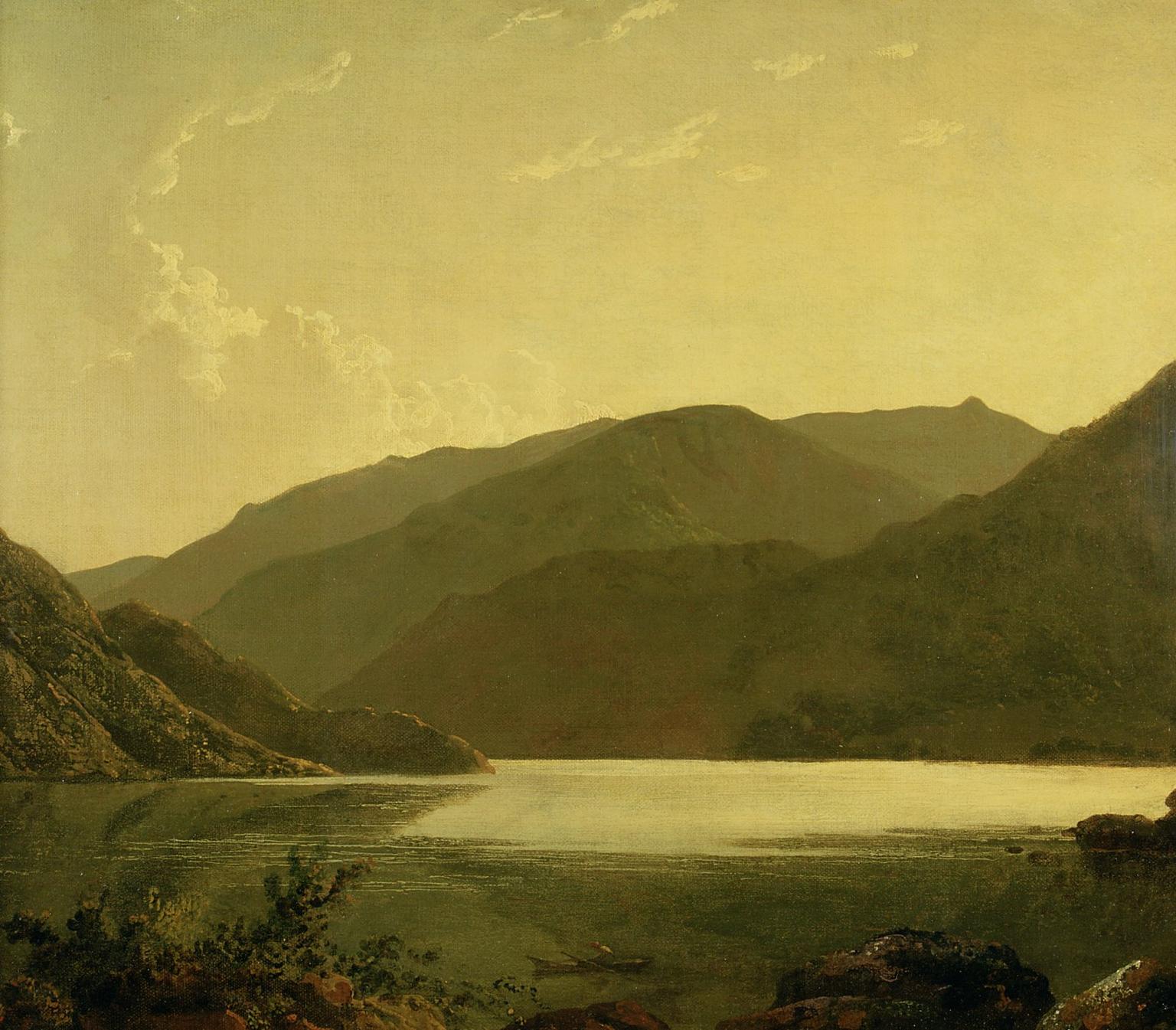
However, his final years were not without their joys, not least among them his late discovery of landscape painting. Writing in 1794, during his second trip to the Lake District in two years, he observes: ‘…here is all grandeur and magnificence. Mountains piled on mountains & tossed together in wilder form, than imagination can paint or pen describe – To have done these tremendous scenes any justice, I sh’d have visited them 20 years ago, when my mind & body were more vigorous.’
Ullswater (c1795), acquired by Wordsworth Grasmere in 1992, is suffused with golden light. The still water shimmers, the hills are bedding down into one another and the sun, as it sets, lingers a moment on a bank of cumulus clouds. Gone is the high drama, the stark contrasts, of the ‘candlelight’ paintings. Ullswater is quiet, but no less spectacular. There’s an air of departure, farewell; Wright has captured in oil the day’s last glorious flourishing before the light finally fades.
Wright of Derby: From the Shadows, to 10 May, National Gallery, London. 50% off paid exhibitions with National Art Pass.
13 June to 1 November, Derby Museum and Art Gallery. Free to all, with ‘give what you think’ for paid exhibitions, free with National Art Pass.