Catherine Opie: ‘A portrait is a shared moment, and a space of acknowledgement’
The American photographer Catherine Opie on history, community, LGBTQ+ identity and a new exhibition at the National Portrait Gallery.
A version of this article first appeared in the spring 2026 issue of Art Quarterly, the membership magazine of Art Fund.
Who is Catherine Opie?
Born in Ohio in 1961, American photographer Catherine Opie has been creating powerful images of individuals, communities and landscapes for more than 30 years. Her subjects, which explore identity, humanity and belonging, include high-school football players, California surfers and her own LGBTQ+ community. Her new exhibition at the National Portrait Gallery in London brings together work from across her career.
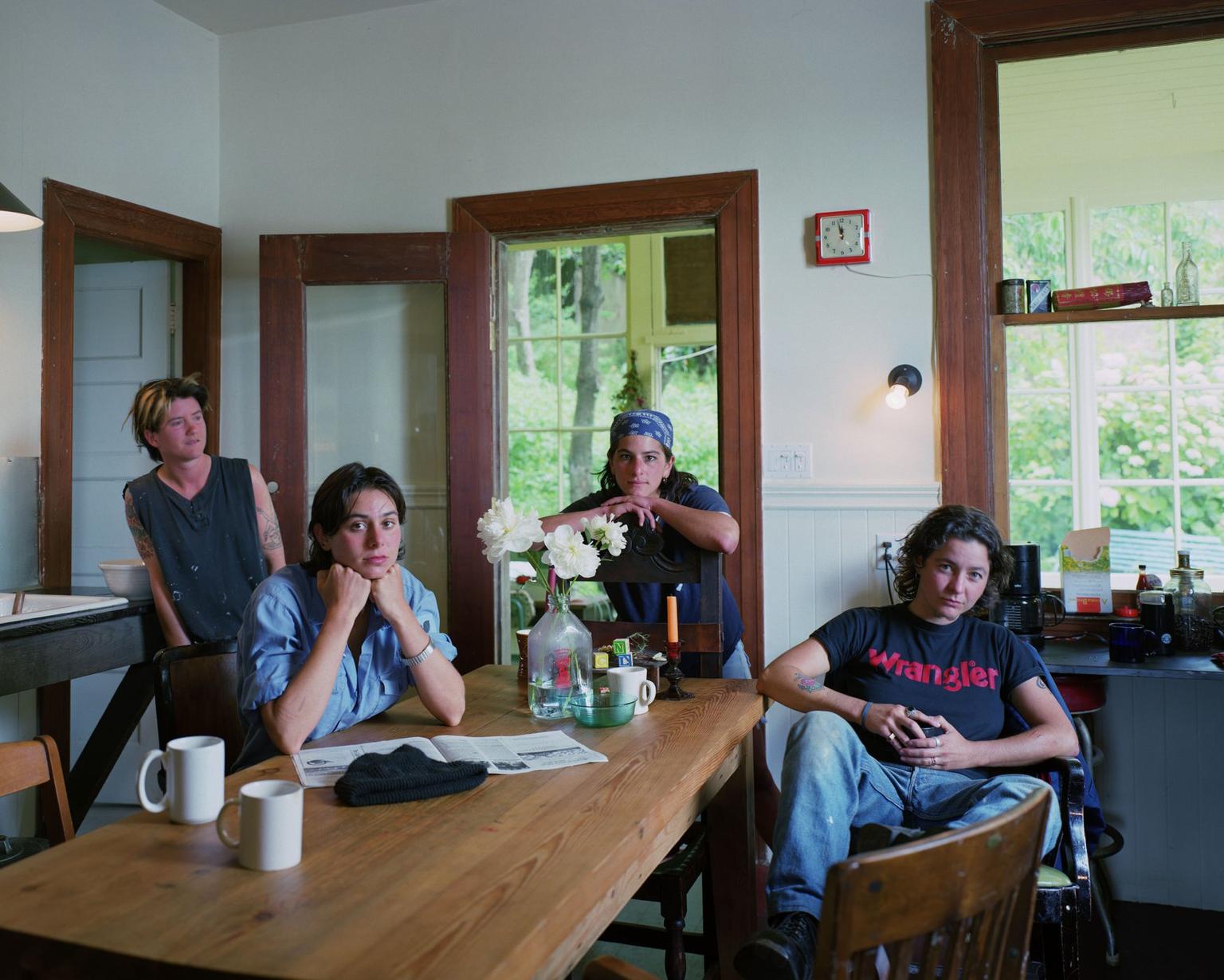
History changes, but what photography has always been able to do for me is create my own relationship to history and to the time I’m living in as an artist. Things shift, but at the same time, all of a sudden, with young queers going through the culture wars again, my early series ‘Being and Having’ (1991) [portraits of Opie’s lesbian and queer-identifying friends performing masculine identity] means something different now than it did when I made it.
That series came out of community and playing. When I thought about making work about my own community or my own identity, I didn’t want it to occupy the tradition of snapshot documentary photography. The faces are quite closely framed, against a yellow background, which was the one thing I could afford, and all my friends came over to my living room one night to make the work.
Formally, they’re really not good portraits, but if you conceptualise the complexity around identity, along with these weird yellow backgrounds, cropping of the face, and the female gaze – because these are women wearing fake moustaches looking back at you – it begins to converse with the notion of the male gaze.
Hans Holbein was an early inspiration: the incredible detail of his paintings and what they did to create an identity around royalty and England itself. I like to think of my early portraits of my friends as my own royal portraits.
Portraiture, for me, has always been about creating a visual representation of people who wouldn’t otherwise be seen. I hope people understand the complexity of portraiture and the importance of thinking about identity through portraiture. It goes back to why portraits were first made in painting: because people could afford it and it established their nobility.
Later, photography disseminated the affordability of becoming seen. That’s a really amazing thing that the portrait photograph did for the working class.
I believe that a portrait is a shared moment, and a space of acknowledgement of one human being trying to make a portrait of a person who is, on the exterior, presenting themselves to me but, on the interior, they are placing themselves in the safest place in their mind.
This show is probably the most personal narrative of my life that I’ve done, and I weave a story of my own American identity, starting with a portrait of me, at nine years old, holding my arms up to make muscles, but the story it tells is also in opposition. What does it mean, for example, when an image of a group of lesbians holding cameras at Michfest (Michigan Womyn’s Music Festival) is hung across from the Pope? Does that make us think about how representation happens?
There is only one landscape in the show, an abstract photograph of the White Cliffs of Dover. When I made it, Brexit was happening, and thinking about the political ramifications of a ‘National’ Portrait Gallery and the Cliffs of Dover in terms of migration was an interesting way to puncture the idea of landscape as identity. When you look at the Cliffs of Dover during a time like Brexit, metaphorically, you have to question who this land is really for.
At a time when nationalism is the word of the day, I’m reminding people that being civically involved does not mean nationalism, that being a citizen of one’s place is not nationalism. The National Portrait Gallery is there to preserve a history, but artists need to puncture what that history is, to talk about the haves and have-nots and ask who gets represented.
I’m really interested in trying to have an audience unpack and be aware of what national or nationalism might mean in terms of where governments are going throughout the world. At the end of the day photography is about a democratic value because we each read a picture from our own personal observations and positions, yet a picture can change the way you think about those dialogues.
Catherine Opie: To Be Seen, National Portrait Gallery, London, until 31 May. Get 50% off with National Art Pass.