Joanna Scanlan: What Barbara Hepworth means to me
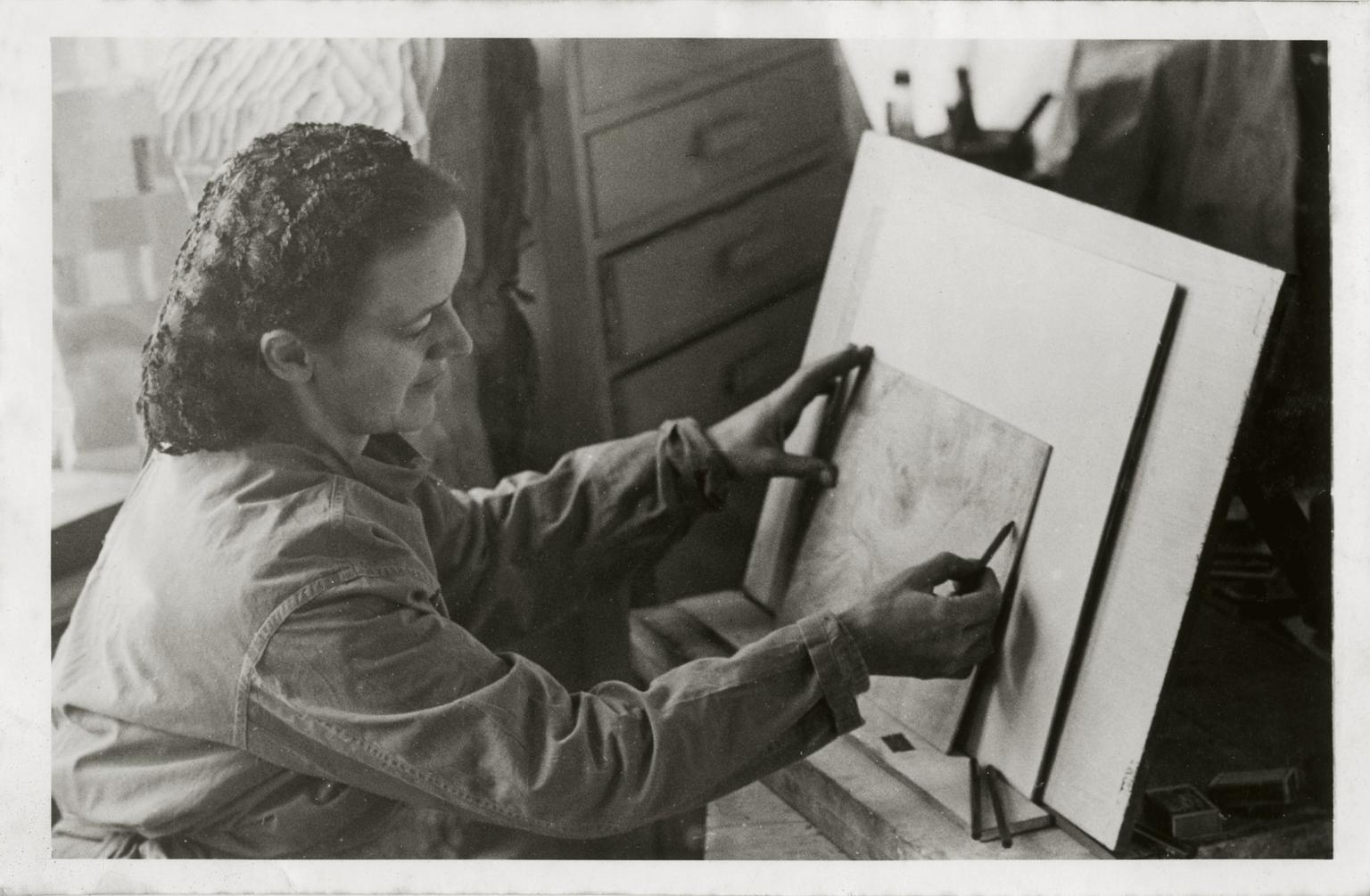
As we fundraise to save a vital sculpture by Barbara Hepworth for the UK, actor Joanna Scanlan shares the impact that Hepworth has had on her and why her art connects with people on a deep level.
I’ve lost one Hepworth in my life, and I’m reluctant to lose another.
I moved to Dulwich in the early 2000s and encountered Barbara Hepworth’s extraordinary, huge, two-metre high bronze in the middle of the park. It was called Two Forms (Divided Circle) – [an] exquisite piece of work that stood in the landscape in all weathers and all seasons.
You could see it from all directions in a way that, I think, really enhanced the experience of being in nature, being with people.
It spoke. I think that’s probably the best way I could describe it.
And we all took it for granted and enjoyed it. It was very much a public work, and part of a dialogue that people had with the landscape and the cityscape and the park scape around them.
Then one cold morning, devoted dog lovers turn up, as per, and discover, in place of that huge, heavy, massive piece of bronze, an empty space. It had been stolen in the night.
And the thinking is that it was then smelted down because, at the time, the price for metals was extremely high and there would have been some reward for this nefarious act, just in the price of the bronze.
The loss, beyond the price of the metal, is incalculable really. It was the most magnificent piece of work and much cherished, much loved.
When you can see a piece of work over and over again during different periods of your life, it becomes something that means a particular thing to you
Barbara Hepworth’s work speaks to me of the inside and the outside, the interior of the human, without actually being a human figure. And at the same time, the way in which those human interiors, as it were, relate to the people around us and the landscape and the experiences that we have during a lifetime.
That work stood for so many people, for many – [it had] been there 40 years – of their childhoods and lives, lifetimes.
I think when you can see a piece of work over and over again during different periods of your life, it becomes something that means a particular thing to you, over and above any intentions that may have existed in the first place.
Art that transcends time
Barbara Hepworth was an extraordinary, possibly the finest sculptor of the 20th century in Britain, in my view.
Her work is complex, it’s tactile, it’s sensual. It’s private and public, somehow. You can own it at the same time as sharing it.
It feels to me like she transcended her time; even though the work is very distinctively of its time, it transcends that time.
I would be so sad if the UK was to lose yet another piece of her very special work, in this case a beautiful piece out of wood and string that is oval, curvaceous – delicious, really.
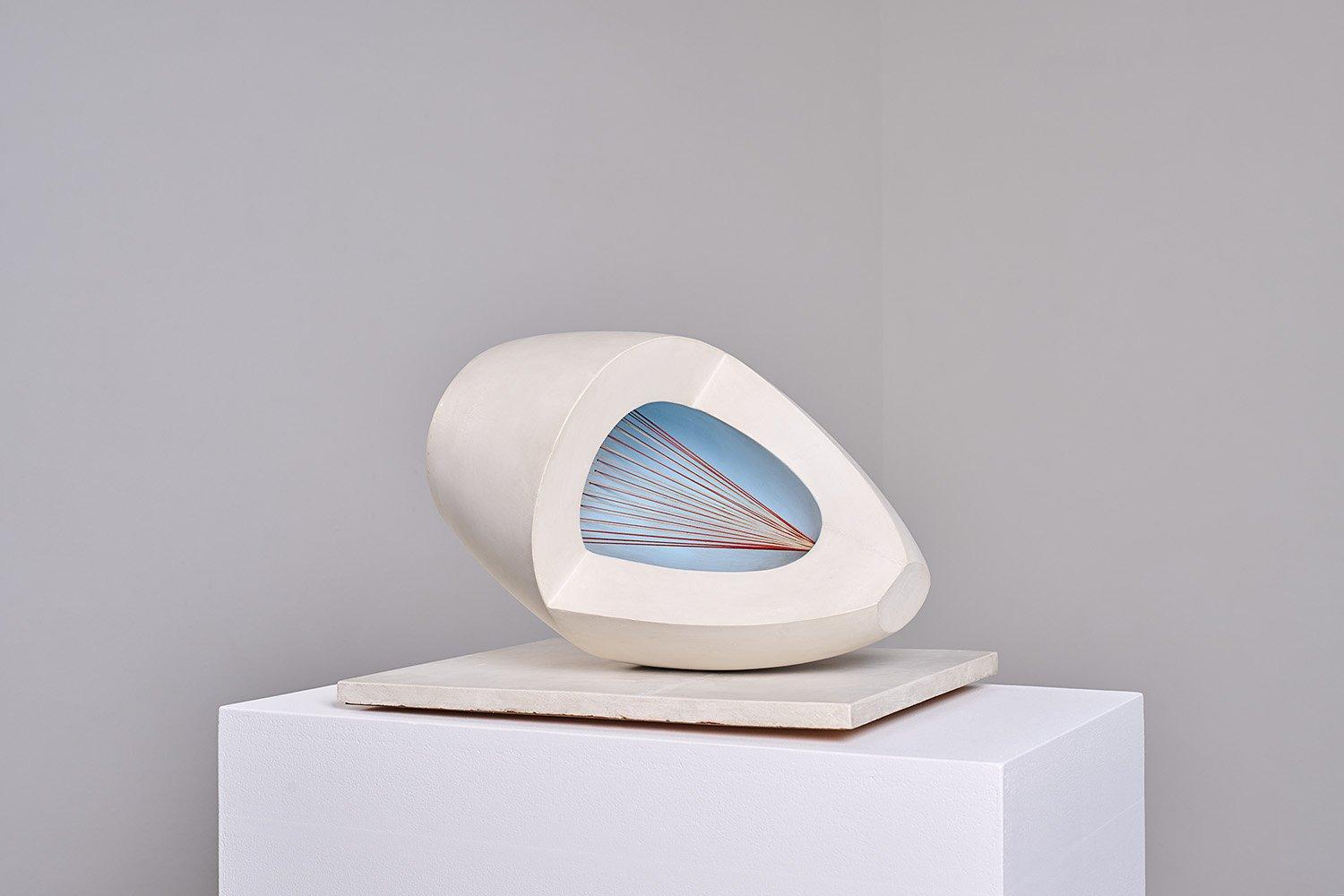
These works will go on and on and on for centuries, and to lose one is a loss for our future
[Barbara Hepworth’s Sculpture with Colour (Oval Form) Pale Blue and Red is] just a lovely, lovely work that speaks beyond itself to her whole history and all of our histories.
What I feel is that these works will go on and on and on for centuries, and to lose one is a loss for our future that, really, I think is quite intolerable.
I can still see that sculpture in the park in its absence, such is its power. And I feel like that is what art does, and is for: to create, in this case, an object which lives above and beyond itself, and can be cherished in the heart as well as in the actual space in which it resides.
So, fingers crossed. I’m hoping that we can raise the remaining money to keep this piece of work in the UK, and not have another loss of something so very precious.