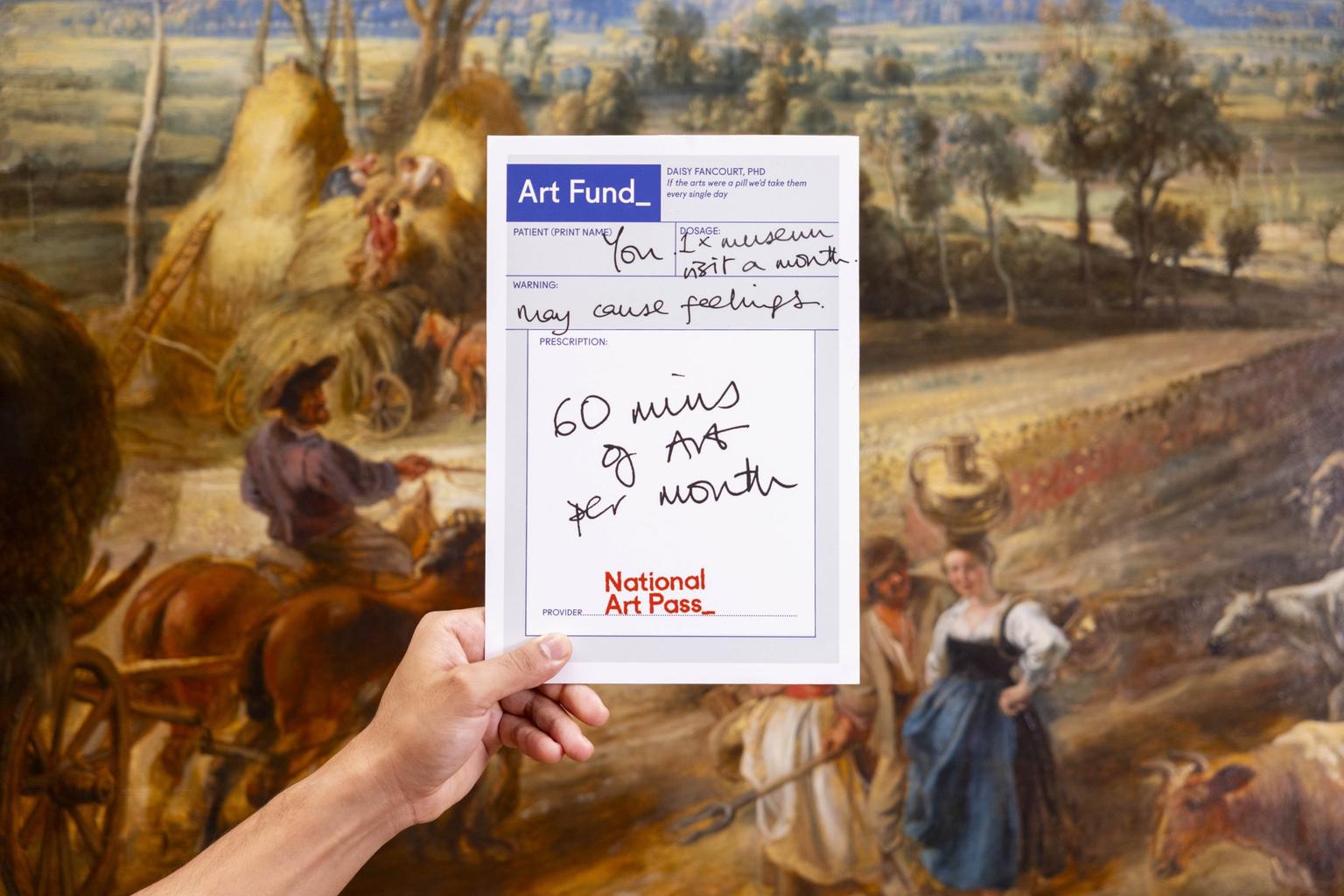
One museum visit a month: New report sets out ‘Recommended Dose of Art’
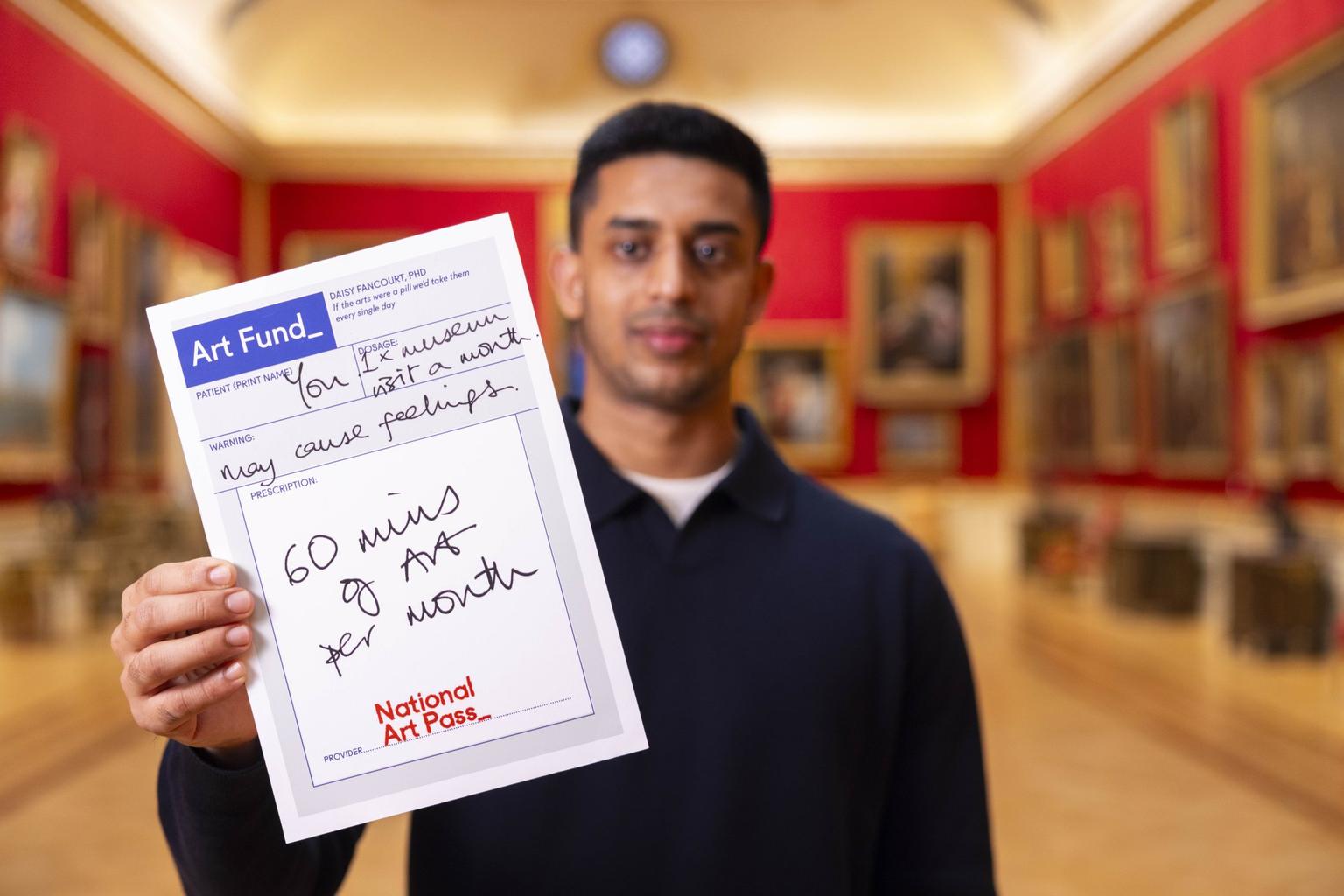
Find out how to get your ‘Recommended Dose of Art’. Our new report, backed by Art Cure author Professor Daisy Fancourt, brings together evidence of the wide-ranging benefits of engaging with art.
What is the Recommended Dose of Art?
Regularly engaging with art at museums and galleries could have a significant impact on public health, according to Daisy Fancourt, Professor of Psychobiology and Epidemiology at University College London.
In partnership with Art Fund, Professor Fancourt is calling for a Recommended Dose of Art (RDA) – at least 60 minutes with art in a museum or gallery every month – to improve physical and mental wellbeing.
About the research
Commissioned by Art Fund in partnership with Professor Fancourt, our new report The Recommended Dose of Art: A Prescription for Health and Wellbeing brings together evidence of the wide-ranging benefits of engaging with art, from reducing stress hormones such as cortisol to lowering the risk of developing dementia and helping adults remain physiologically younger.
Yet new research commissioned by Art Fund and carried out among 2,000 UK adults reveals nine in 10 (89%) people currently miss out on the recommended intake, equivalent to an estimated 49.5 million adults.
It also revealed a huge knowledge gap when it comes to the benefits of consuming art, as just 17% considered supporting mental wellbeing to be a benefit of visiting museums and galleries, falling to 7% understanding it as a benefit to physical health.
Regular engagement and meaningful encounters with art are now recognised as an important contributor to our health and wellbeing, and the evidence suggests they should be viewed as health-promoting behaviours, alongside having a balanced diet, regular exercise and spending time outdoors.
Guidelines like eating our 5-a-day of fruit and vegetables and getting our 10,000 steps have proven effective in helping us to prioritise other health-promoting behaviours in our busy lives. Adding regular arts engagement to this list could be a simple and joyful way of investing further in our health and wellbeing.
How can art support wellbeing and mental health?
The report cites evidence showing that engaging with art is deeply linked to our mental and physical wellbeing at every level, from the workings of our cells and molecules to cognition, memory and mood.
Regular visits to museums and galleries could nearly halve the risk of developing depression over the following 10 years. Research is also positive for the impact on loneliness, as older adults who go to museums, galleries or concerts have 32% lower odds of reporting loneliness 10 years later, compared to those who aren’t so culturally active.
Viewing original artworks in a gallery can have a much greater effect on our wellbeing than looking at reproductions, as in-person viewing can lead to around a 22% greater reduction in the stress hormone cortisol compared with viewing reproductions of art.
Findings also show that health span, the time that people are functionally fit and free from illness, may also be extended by engaging with art. By keeping people active and engaged, studies indicate that by the age of 80, adults who never engaged in the arts are 1.3 times more likely to be frail. And the combined mental, cognitive, and physical benefits of cultural engagement may even bring benefits for longevity, as studies have shown that culturally engaged people have a 31% lower risk of dying at any point over the next 14 years (not withstanding other variables like wealth, health, demographics and disabilities).
How to get your Recommended Dose of Art
The report includes eight top tips for getting more art in your life, from exploring your local museum to keeping things varied by trying somewhere new.
To make it easier to build regular visits into everyday life, the National Art Pass offers free or discounted entry to hundreds of museums, galleries and exhibitions across the UK, as well as 50% off major exhibitions.