‘A common art for a new democratic age’: How Art Deco transformed the Underground
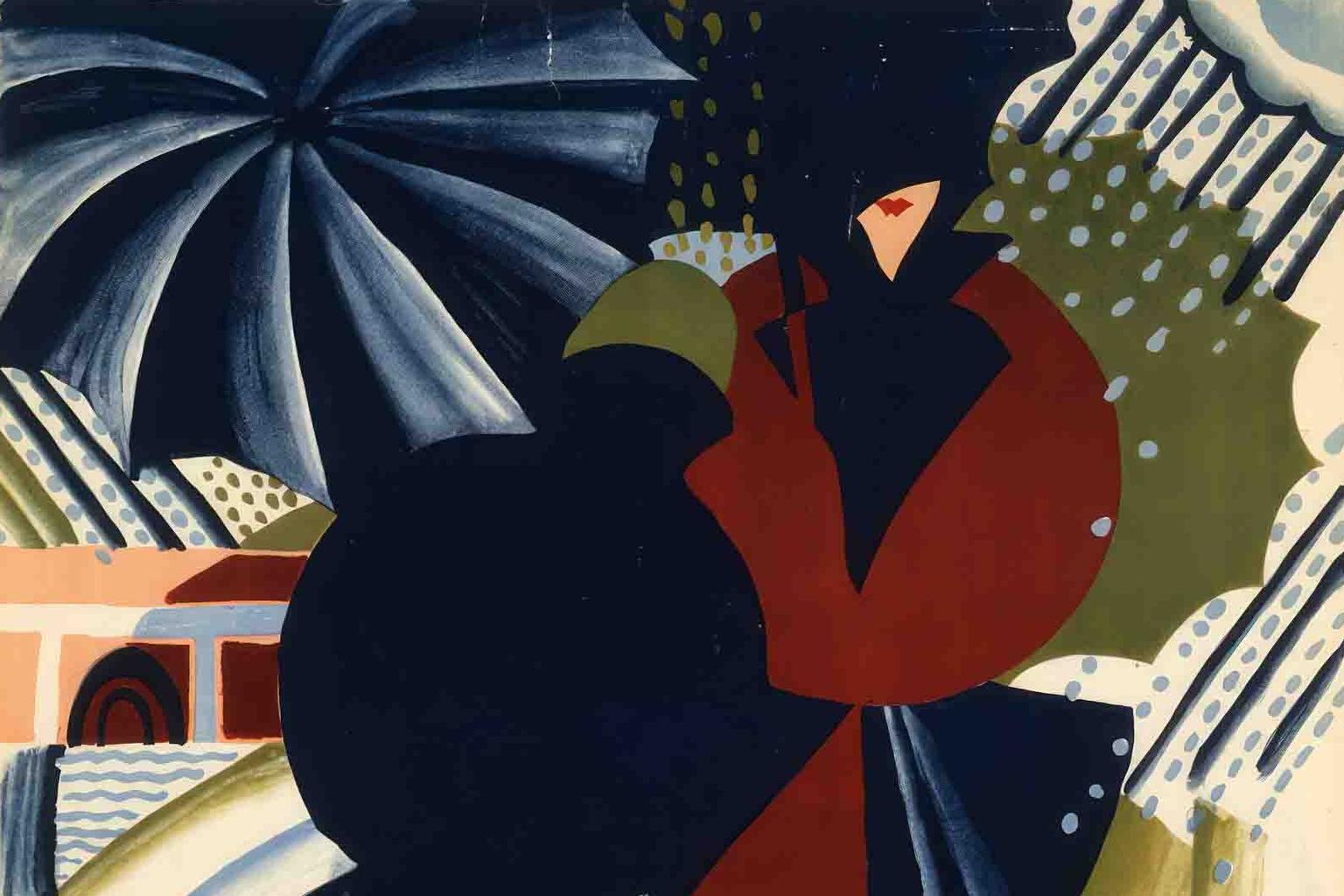
A new exhibition at the London Transport Museum is celebrating 100 years of the Underground’s Art Deco design heritage.
A version of this article first appeared in the winter 2025 issue of Art Quarterly, the membership magazine of Art Fund.
‘Unique in character’; ‘tasteful and efficient’; ‘courageous and intelligent’, as well as ‘one of London’s greatest attractions’. These, and many other compliments, were being directed at the London Underground (and, later, the London Passenger Transport Board) in the 1920s and 1930s. The apparently endless stream of praise was in response to the modern art and design being built, installed and supported by one of Britain’s most important transport networks.
Travelling on the Tube today, it is easy to overlook some of the bold and innovative art and architecture of the 1920s and 1930s that is on display. The stations and the identity of transport in London are simply part of our suburban landscape. However, in the interwar years, executives at London Underground were using not only the latest in art and design to create a united and profitable transport system, they also wanted to cultivate the artistic sensibilities and taste of the public.
Much of what was implemented was what we would now term Art Deco, and it was both functional and aesthetically pleasing. The style had an immediate impact, and it would also have a long-lasting legacy. London Transport Museum’s exhibition Art Deco: The Golden Age of Poster Design is celebrating that design history through a showcase of posters, photography and original artworks.
The centenary year of Art Deco, 2025, commemorates the 1925 Exposition internationale des arts décoratifs et industriels modernes (International Exhibition of Modern Decorative and Industrial Arts) in Paris, which was conceived by the French government as a showcase for the cultural ingenuity and taste-making power of the nation. There was an insistence on exhibitors embracing originality and modernity, while maintaining the luxury of their goods and displays. Other nations were invited to erect their own pavilions and to show off their latest decorative arts, although when it came to it, it was almost exclusively other European nations that participated.
The 23-hectare site in central Paris was transformed into a ‘dream city’ where temporary buildings were made in the most modern forms. Concrete, plaster and stone-clad walls created blank canvases for external ornamentation such as friezes, paintings or gilding; expanses of glazing flooded interiors with natural light, and, everywhere, grand proportions were the order of the day. Inside, the pavilions were filled with lavish décor, beautiful objects and desirable consumer goods. At night, lighting created an entirely different feast for the senses: cascades of coloured water, enormous searchlights and illuminated pavilions gave the expo an otherworldly gleam.
Enormously popular, the exhibition was visited by some 16 million people and 15,000 exhibitors took part. In addition, this was now an era of photography, faster communications and mass audiences, meaning that information concerning the expo spread far and wide. Art Deco may not have been born in Paris in 1925, but this was where it was announced to the world as a legitimate and far-reaching art movement.
The first fleeting glimpses of a changing artistic direction can be seen just prior to, and during, the First World War. Like many art movements, the origins of this one are complex. Art Deco took its basic ideals or principles from Art Nouveau, which wanted art and design to be available to all; but stylistically, it was radically different.
In the 1910s, artists across Europe were seeking to escape Impressionism and realistic representation. Their radical and stylised images would lead to the curlicues and tendrils of Art Nouveau being replaced with simple geometry, clean lines and bold colours. However, it was only after the war, when the carnage and destruction of those years could at last be reflected on, that Art Deco became fully established.
Across all of Europe, political, economic and social changes were materialising, and the art of previous eras represented everything that was wrong with the pre-war attitudes. New technologies and increased industrialisation made people feel modern; greater individualism and commercialism were on the horizon. Art Deco was a broad-ranging cultural and visual response to these transformations.
It might be said that Art Deco is in fact the world’s first all-encompassing art movement: the mediums where it could be found were astonishingly wide-ranging. Fine art, graphic design, architecture, film, fashion, photography, furniture, sculpture, industrial design, almost anything in fact, could be subject to the Art Deco influence.
The breadth of areas where it appeared were partly due to the myriad sources from which it drew. Ancient civilisations such as Egypt, Greece and Rome provided inspiration in Europe: architecture borrowed classical scales and proportions, and, in other areas, different forms and motifs were taken from archaic sculptures and decorative arts. Egyptian art and hieroglyphics, with their distinctive geometric shapes and lavish colours, also caught the imagination of artists.
In America, it was Meso-American cultures such as the Maya and Aztecs which provided a historical grounding free from European influences; their bold iconography was refabricated for a modern world. Western fantasies of Eastern cultures, particularly Japan, were strongly felt in the early years of Art Deco, and can be seen in works such as Fred Taylor’s 1922 London Transport poster that promotes tram travel from West London. Finally, as ever in art, ideas were derived from nature. Strength, movement and fluidity found in the natural world and the human form were key motifs.
The interwar period did not see a simple tweaking of these traditional art forms and inspirations. Rather, Art Deco modernised and rethought them using the tools provided by experimental and avant-garde schools of art. Cubism, Expressionism and Constructivism offered up boldness, abstraction and geometry inspired by an increasingly mechanised age. These ideas began in the artworld, but over time they were absorbed into design, whether in architecture, interior design or consumer goods. The world was literally being decorated with art.
The accessibility of this new style is also a crucial part of the Art Deco movement. This was a highly visible art movement. It was not shut away in galleries, kept only for the eyes of the elite and the educated; this was a common art for a new democratic age.
Whether it was through the architecture of a recently erected office building, or a stylish tea set bought from a chain store, the public were able to experience design in a way that they had never been able to before. The creation of this Art Deco art was undertaken in both ateliers and factories; and it ranged from extravagant and expensive objets d’art to everyday functional items. Art, design and commerce were meeting in a novel and exciting way, and the London Underground offered a masterclass in uniting them.
For people living or travelling to London, some of the earliest Art Deco that they would have encountered was in the ticket halls and tunnels of the Tube network. In 1906, a visionary named Frank Pick started work at the Underground Electric Railway. He took on responsibility for publicity for the Underground two years later. With an innate grasp of both business and art, he understood that good design could have a direct commercial impact, and he instigated a pictorial advertising campaign.
From the very first work that he commissioned he embraced modernity, and by the 1920s he was employing a raft of extraordinarily talented artists and graphic designers to create eye-catching works for the network. These posters were designed to spur users to think beyond using the system just for their daily commute. Day trips to different areas of London and the surrounding countryside were encouraged; women were exhorted to use buses and the Tube to go shopping; cultural and sporting events were promoted. Anything that could help increase passenger numbers was a suitable topic for this artwork.
By 1928, the critic Sir Lawrence Weaver said that the walls of the Underground ‘provided the people of London with a picture gallery as fine in some ways … as the Tate or the National [Gallery]’. Indeed, in 1929, such was the success of the Underground posters in terms of both critical and public appreciation that a selection of them was exhibited at the Royal Academy of Arts.
The London Underground emphasised the difference between these works and traditional fine arts with a sign at the entrance stating: ‘There is no Catalogue. A good Poster explains itself.’ The press also sang the praises of the work seen on the Underground, bemoaning that other than railway companies, most businesses were being slow to adopt modern tendencies in advertising. They argued that if all businesses put as much effort into their art as London Underground did, hoardings would be more attractive and the public would be far more artistically enlightened.
The most successful graphic designers at the London Underground were those, such as Edward McKnight Kauffer, who understood that it was an idea that was to be conveyed, not a place or object. The illustrations of leisure activities, visitor attractions and events were emblematic, dream-like and aspirational. Similarly, the ‘Riches of London’ series by Frederick Charles Herrick consists of representations of the sensory experiences one might have in the city. And while open-top buses such as the one depicted in Vera Willoughby’s 1928 poster General Joy had largely been replaced by this time, she used this type of vehicle to create a sunny and cheerful ambience. Posters were used to convey a combination of inspiration, feeling and information: function was as important as beauty.
Although Pick (who would go on to become the Chief Executive of London Transport) was passionate about the art and use of the poster, he did not restrict himself simply to lining the walls of his stations with these ephemeral works. The stations themselves would also be works of art. From refurbished stations in central London to brand-new stations in the suburbs, Art Deco was used with striking effect. At the heart of the city, for example, Piccadilly Circus was subject to a major reconstruction. Designed by architect Charles Holden, the station opened in 1928 and was both practical and luxurious. A spacious circular ticket hall was supported with red Doric columns, travertine marble lined the walls and bronze fittings abounded.
Meanwhile, in the suburbs, the new stations along the Northern and Piccadilly lines made full use of the latest innovations and architectural styles. The fussiness that can be found in architect Leslie Green’s (1875-1908) earlier Art Nouveau stations was exchanged for pared-back minimalism. Walls were faced in Portland stone on the Northern Line, while on the Piccadilly Line London brick was the facing of choice. High-ceilinged ticket halls, expansive glazing and easy-to-navigate spaces were the norm for both.
In addition, the use of the modern Johnston font (created by typographer Edward Johnston) on signs and prominent roundels, and an almost fanatical eye for design detail, meant that the stations were instantly recognisable as being part of the London Underground network. The legacy of this Art Deco-inspired corporate branding exercise is still with us today: not only do the stations remain, but the idea that form and function should be of equal value also endures.
Art Deco made a real contribution to the beauty and function of the London transport network but, beyond this, it gave people access to the newest forms of art and design. Pick and his team of artists and architects found the perfect balance of challenging accepted norms, while never alienating passengers. One hundred years on, the glamour and flair of those interwar posters still have the power to thrill and delight, and contemporary visitors to the London Transport Museum now have the opportunity to experience the ‘people’s picture gallery’ once again.
Art Deco: The Golden Age of Poster Design, to spring 2027, London Transport Museum. 50% off annual off-peak ticket with National Art Pass.