How a V&A curator expanded her expertise and deepened the museum’s holdings
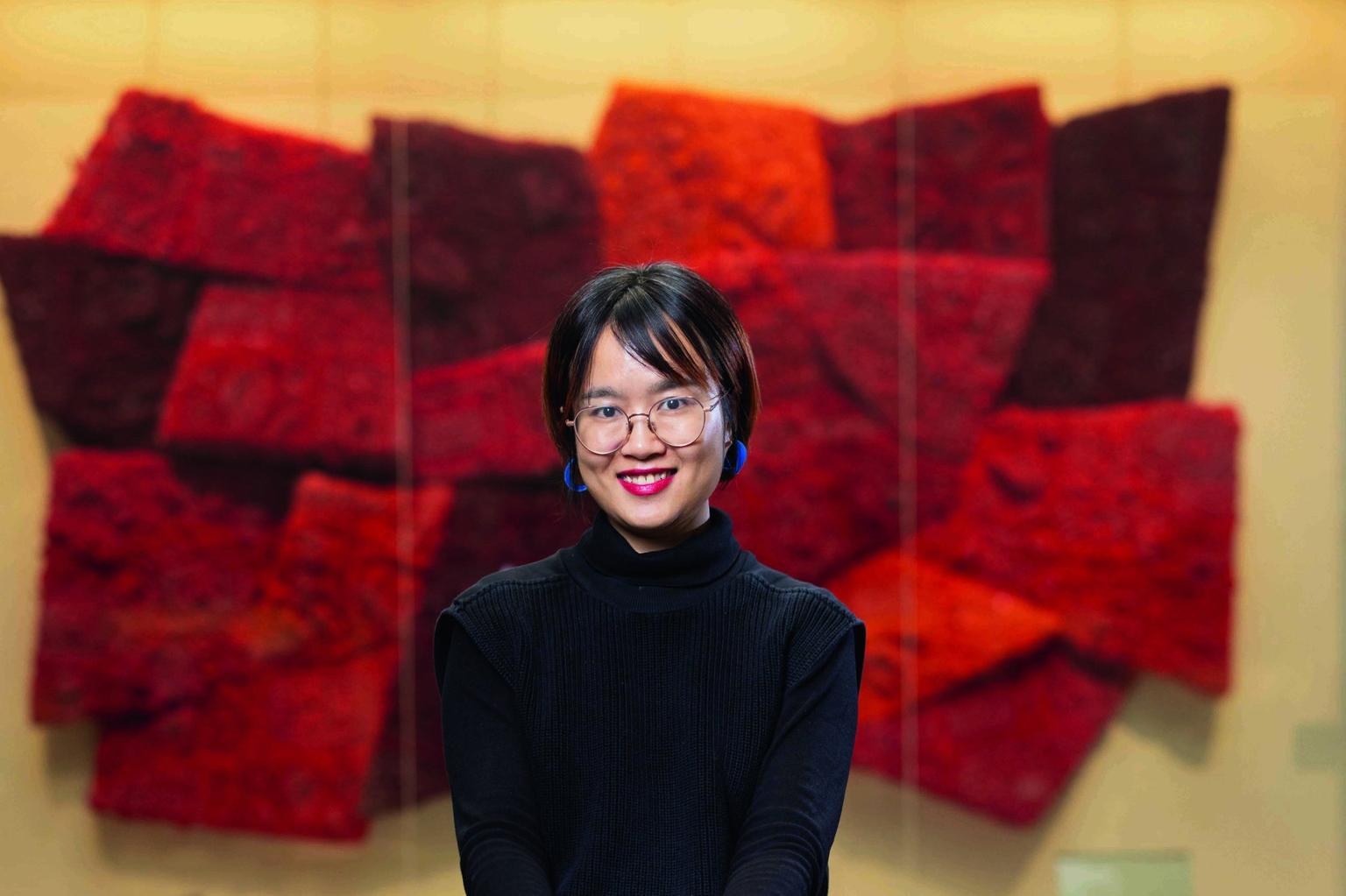
A new temporary display of contemporary Chinese studio crafts at the V&A South Kensington is one result of a New Collecting Award from Art Fund.
A version of this article first appeared in the winter 2025 issue of Art Quarterly, the membership magazine of Art Fund.
For the past five years, curator of Chinese collections at the Asia department of the V&A, Xiaoxin Li, has been researching the development of Chinese studio craft since the 1980s, revealing the many dimensions of artistic practice and how they relate to China’s longstanding craft traditions. In 2020 Li was one of five curators to receive an Art Fund New Collecting Award (a programme that supports UK curators to build and diversify their museum’s holdings, made possible by the generosity of individuals and trusts). Li’s award supported the acquisition of 15 objects, with interest in the project then opening doors for additional support and funding from elsewhere, resulting in a wider project and a further 32 objects joining the V&A collection. Now, all these works can be seen at V&A South Kensington across the two-gallery display ‘Dimensions: Contemporary Chinese Studio Crafts’.
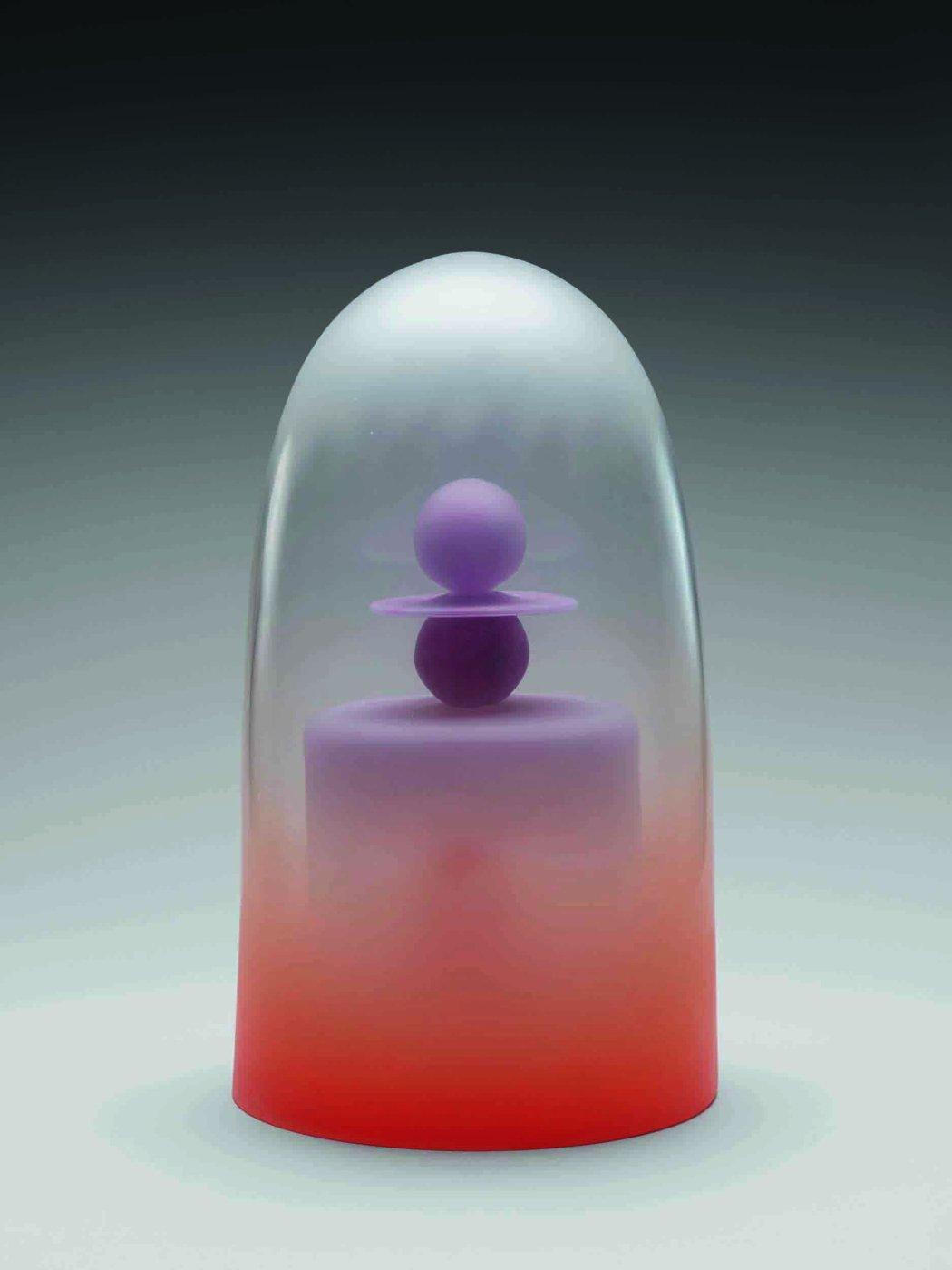
‘Halfway through, when I realised this could become much bigger, I started to plan a display that would cover all the materials of contemporary craft: glass and ceramics, lacquer, metal and fibre,’ says Li. Accordingly, in the China gallery, more recent objects are now shown among older works, under four themes: heritage; material and technique; expressing ideas; and aesthetics. This clever incorporation with the more historic works gives visitors a direct reference and comparison over time and in relation to iconographies, styles or forms. While in the Ceramics gallery, there is a concentrated focus on studio ceramics, since this is the largest grouping of acquisitions. Here, there is a section on production hubs, another on institutions, and three vitrines looking at clay, glaze and painting.
One key work acquired through the award is Energy of Clouds (2025), a lacquer and wood piece by Tang Mingxiu.‘ Lacquer is a very specialist material in China,’ says Li. ‘In the 1980s, Chinese artists started to think about craft not as utilitarian objects, but as a means of artistic expression. At the time lacquered objects were seen as old-fashioned factory products, but lacquer itself was established as an important material in fine-art painting. Then, gradually, artists and curators argued to restore its essential function of coating objects. That’s how it was used historically, as a way of giving objects immortality.’
‘Mingxiu has always focused on the essence of the material itself,’ Li adds. ‘Living in the mountains, he collects random objects, such as broken tools and rotten tree trunks, and lacquers them again and again over many years.’ Energy of Clouds, for example, is a panel he worked on between 2010 and 2025. ‘It’s not just about the aesthetic value of the object, it’s about the value of the craft itself. He was thinking of it as a healing process: the combined power of material nature and manpower, and how to give an object a new life. Tang’s work represents the spiritual essence of Chinese craft, so it’s very important to include him. I’m glad that the Art Fund grant enabled this.’
Another piece of particular significance is the glazed stoneware sculpture Shen Gongbao (2022) by Zeng Peng. This artist was one of a group of three to show works in 1984 that were the first documented in China as being described as ‘modern ceramics’ in a museum exhibition context. Meanwhile, Tong Xindi’s Blue-Green Curtain (2021) is, according to Li, a ‘younger’ work. In actual fact, it is cutting-edge contemporary. This beautifully glazed stoneware panel has been made entirely by printing processes. To this end, Xindi invented a machine that can design and control the printing of the pattern. ‘The piece also shows a new generation of artists who are not thinking so much about identity or whether or not craft is art, but are more interested in looking at technology,’ Li says.
A very important aspect of the project, enabled by the Art Fund grant, was the research. ‘Contemporary studio craft in China is a very niche area, and, outside China, it’s virtually unknown,’ says Li. ‘I made seven or eight trips to China, each time visiting many cities and artists, and that’s how I eventually built up the project, identifying those whose work I wanted to acquire. I couldn’t rely on books. I had to visit the artists.’
As well as producing the new display, Li is writing a book about the collection. ‘I talk about the different generations and the development of studio craft over the past 40 years, including in the book personal reflections from artists on the key issues of their time,’ she says.
Unsurprisingly, Li is now considered an expert in the field, and, in December, she will be presenting the project at the Forum for Curators of Chinese Art, which is co-hosted by the Bei Shan Tang Foundation and the Musée Guimet in Paris.
‘Dimensions: Contemporary Chinese Studio Crafts’, V&A South Kensington, London, to 27 September 2026. 50% off exhibitions with National Art Pass
A writer, editor, curator and researcher.